



Do you remember that feeling in the classroom when there was no ventilation – the air became heavy and stuffy, and you’d end up with a headache after lessons? The same thing happens at home if not enough fresh air gets in.

Most people replace filters only when they become visibly dirty. However, even a filter that looks “still usable” may already fail to clean the air properly. Sometimes people try shaking, vacuuming, or blowing through the filter – but that only helps for a short while. Why is that, and what is the real difference between old and new filters?

Properly maintained filters are essential to ensure you always breathe clean air at home. Changing the filters isn’t difficult – you just need to follow a few simple steps.

Summer can bring higher air pollution than other seasons due to traffic, wildfires, pollen, heat smog, and dust. The right ventilation filters — such as G4 for dust, M5 or F7 for allergens and smog, and activated carbon for odors — can protect indoor air quality. Filters should be checked every 3–4 months in summer to ensure optimal performance.

Many wonder if turning off their heat recovery ventilator (HRV) during summer saves energy. While it might seem logical since heating isn’t needed, modern HRV systems with summer modes use minimal electricity and provide significant benefits. Keeping your HRV running ensures cleaner, healthier air by filtering out dust, pollen, and bugs, reduces noise compared to open windows, improves ventilation in windowless rooms, enhances security, and even offers night cooling. Overall, running your HRV year-round is a smart choice for comfort, air quality, and safety.

Heatwaves are becoming increasingly common throughout Europe, and many people are looking for ways to maintain a comfortable indoor environment at home, even when it’s over +30 °C outside. Since air conditioning isn’t standard in every home, more and more people are turning to ventilation systems or fans to improve the air quality indoors.

Heat smog, or photochemical smog, is a dangerous type of air pollution that forms during hot, sunny, and low-wind summer days—especially in cities with heavy traffic. It results from chemical reactions between sunlight and pollutants from vehicles and industry, producing harmful substances like ground-level ozone. Heat smog irritates the respiratory system, worsens chronic conditions, and poses serious health risks, particularly for vulnerable groups such as children, seniors, and people with asthma. The best protection includes avoiding outdoor activities during peak pollution hours and using certified high-performance filters indoors.

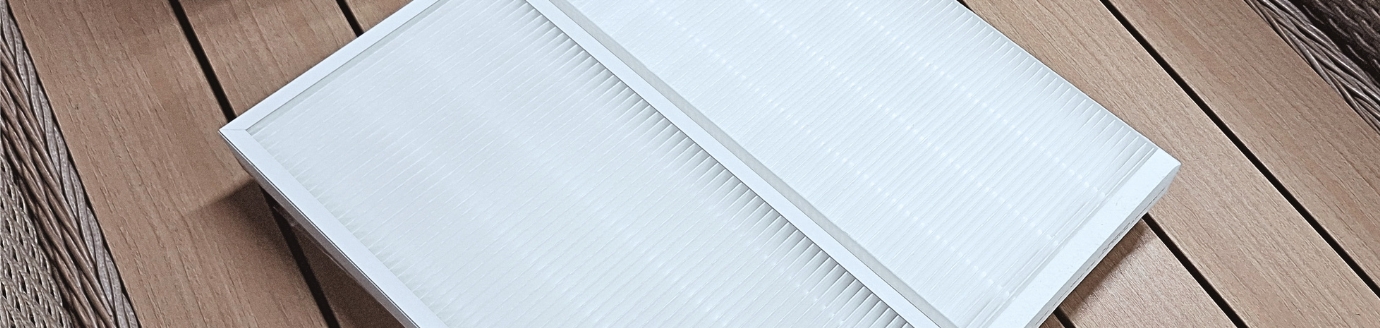
CleanFilter started manufacturing new filters for Mitsubishi Lossnay air handling units (MVHR). Replacement filters are for 2 ranges Lossnay VL (250, 350, 500 sizes) and Lossnay LGH RVX3 (15, 25, 35 sizes).
Regular filter replacement is essential to maintain the efficiency of your MVHR (Mechanical Ventilation with Heat Recovery) unit, reduce energy consumption, and extend the life of your ventilation system. While changing filters is a simple task, manufacturers often provide only basic instructions, leading to common mistakes.
Coarse filters capture larger particles like dust and sand while ensuring low airflow resistance, quieter operation, and energy efficiency. Ideal for ventilation systems, they extend filter lifespan and protect HVAC components. CleanFilter Coarse filters offer premium materials, high dust-holding capacity, and certified performance for cleaner indoor air.