


1 month or 12 months: why do ventilation unit filters get dirty faster in some homes than others?
1. Outdoor pollution: the part you usually cannot control
The first thing that affects ventilation unit filters is the quality of the air coming into your home from outside. This is why the ventilation unit filter replacement interval can vary so much, even when the same unit and the same filter class are being used.
Pollution can be temporary, seasonal or constant. The more dust, smoke or soot reaches the air intake, the faster the filter will darken and become clogged.

Temporary pollution
A filter can become dirty in just a few days if a lot of dust or smoke suddenly appears nearby.
- building work or road repairs;
- groundworks and excavation;
- fire, soot or short-term industrial pollution.
Seasonal pollution
At certain times of year, filters have to work harder, even if the area around the home looks fairly normal.
- the heating season and low-lying smoke;
- dry weather and dust from roads;
- dust from gardens, fields or agricultural land.
Constant pollution
In some locations, filters are exposed to tougher conditions every day.
- a home next to a busy road or gravel track;
- an air intake positioned close to a road;
- industrial surroundings or a more polluted part of town.
Which filter class should you choose?
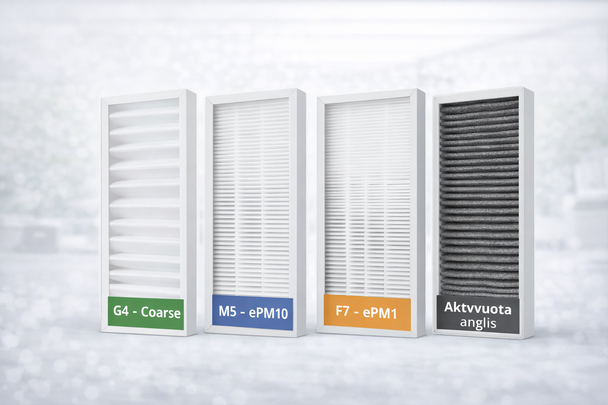
If the main issue is larger dust particles, for example from a gravel road, nearby construction work or garden activity, a G4 class filter may be enough in some cases. It usually has lower air resistance and may last longer if there is no significant fine particle pollution.
If you live in an area where solid fuel is commonly used for heating, or close to a busy road, better filtration is usually needed. In this case, an F7 class filter is often the more suitable choice. It captures more fine particles, but it can also become dirty faster and create higher air resistance.
2. Ventilation unit selection and operating mode
The second important factor is how much air passes through the filter. The more intensively the ventilation system runs, the more dust and particles the filter has to capture, so it may become dirty sooner.
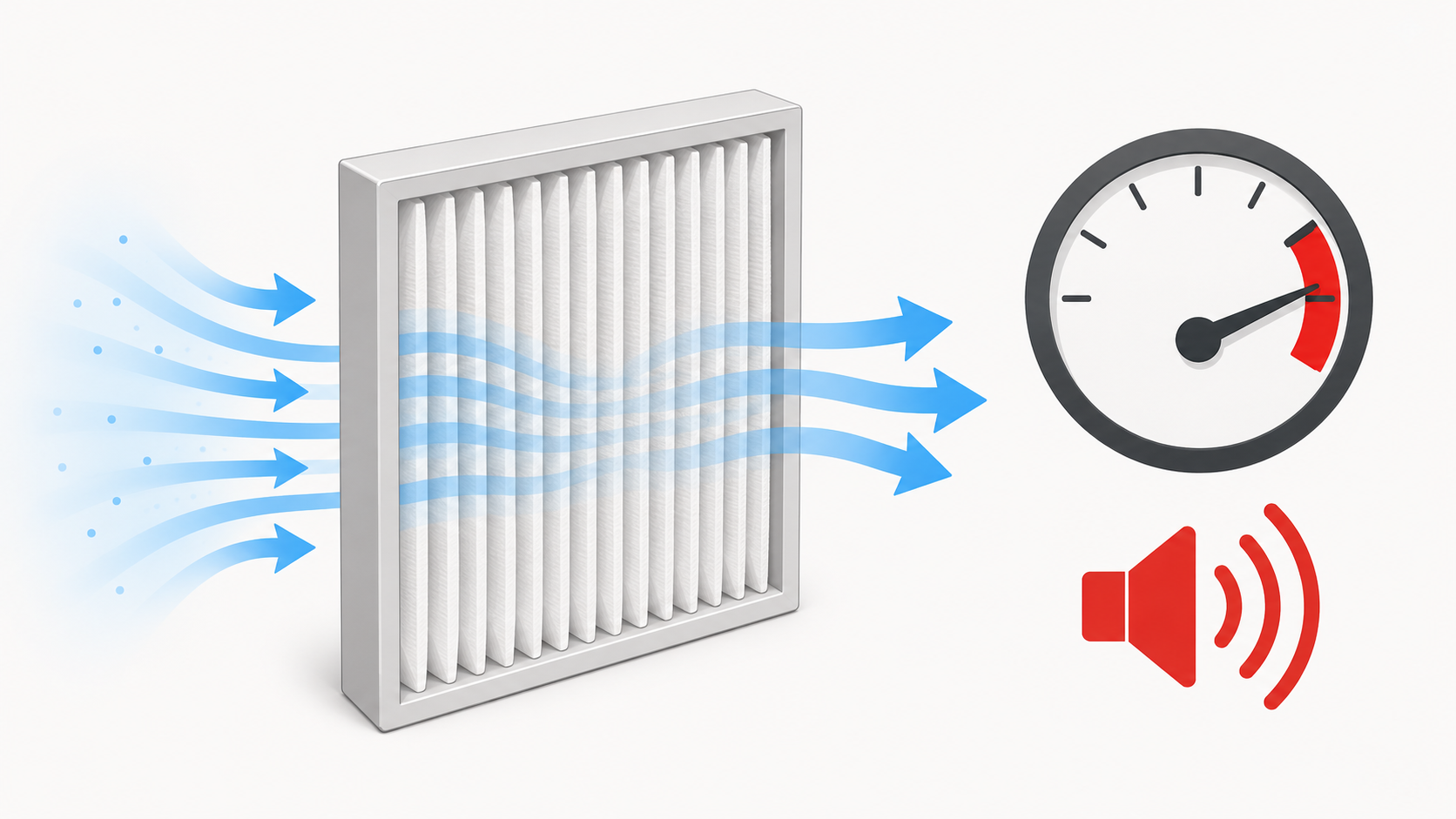
⚙️ The key point: if a ventilation unit is already working close to its limit with clean filters, even a small amount of dirt in the filters can quickly become noticeable. Airflow may drop, the unit may become louder or error messages may appear.
Higher airflow
More air passing through the filter also means more particles being captured. This is why filters can become dirty faster in homes where the ventilation system runs more intensively.
Working close to the limit
Ideally, the unit should have some reserve capacity in normal use. If it is constantly running almost at maximum output, dirty filters are more likely to cause extra noise, error messages or reduced airflow.
Timer and filter warnings
Some ventilation units simply count the time since the last filter change. If the filters have been replaced but the timer has not been reset, the unit may continue to show a reminder.
⏳ Practical tip: if the ventilation unit still shows a warning after the filters have been changed, first check whether the filter timer has been reset. If the unit is running louder than usual or the airflow has dropped, it is worth checking the filter direction, how well the filter fits and whether the correct filter class has been selected.
3. Filter selection, quality and installation
The third reason is the filter itself. It is not only the size that matters, but also the filter class, air resistance, sealing and installation direction.
Filter class
A more efficient filter captures more fine particles, but it usually has higher air resistance. This is why the filter class needs to be suitable for the specific ventilation unit.
Installation
If the filter is installed in the wrong direction or does not sit tightly in place, airflow may drop and the unit may become noisier.
Quality
A filter that lasts a long time does not automatically filter well. And a filter that gets dirty faster may simply be capturing particles more effectively.
✅ Practical takeaway: do not choose a filter by dimensions alone. It should be suitable for your specific ventilation unit, fit securely, be installed correctly and be made from high-quality filter material.